
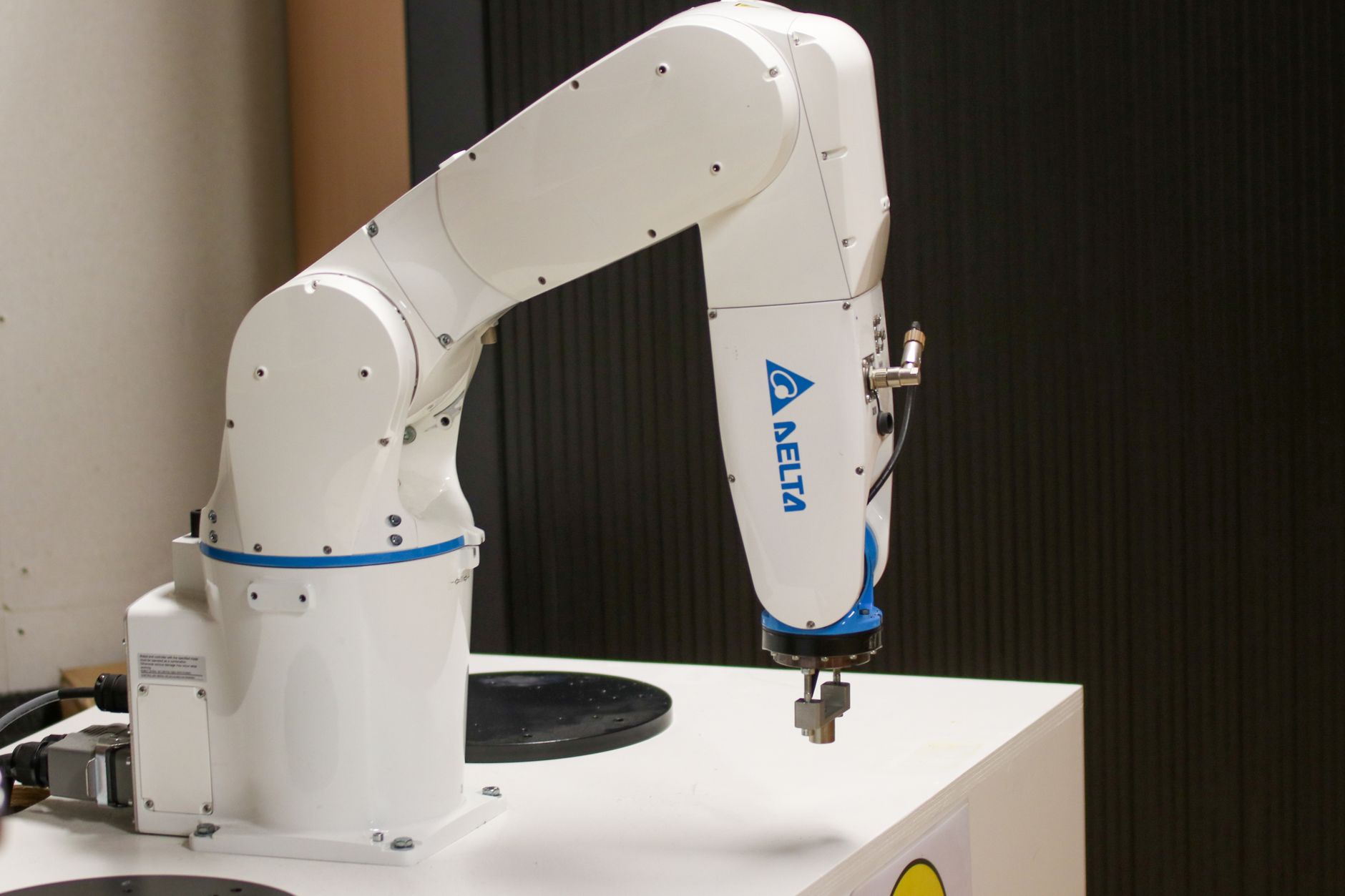
Undergraduate Certificate in Robot Programming
Wednesday, 12 August 2026 05:56:24
International applicants and their qualifications are accepted
Overview
Overview
Robot Programming
is an exciting field that combines computer science, engineering, and artificial intelligence to create intelligent machines.This undergraduate certificate program is designed for students who want to learn the fundamentals of robot programming, including robotics, artificial intelligence, and computer vision. The program covers topics such as programming languages, sensor integration, and machine learning algorithms.
By the end of the program, students will have the skills to design, develop, and deploy robots that can interact with their environment.
If you're interested in pursuing a career in robotics or automation, explore this certificate program to learn more about robot programming and its applications.
Content updated: 22 August 2025
Robot Programming is the foundation of the Undergraduate Certificate in this field, offering a comprehensive education in the design, development, and deployment of intelligent systems. This course provides students with the skills to program robots to perform complex tasks, leveraging programming languages such as C++, Python, and Java. Key benefits include hands-on experience with robotics hardware and software, collaboration with industry partners, and access to state-of-the-art facilities. Graduates can pursue careers in robotics engineering, artificial intelligence, and automation, with opportunities in manufacturing, healthcare, and logistics. Unique features include project-based learning and a focus on real-world applications.
Entry requirements
The program operates on an open enrollment basis, and there are no specific entry requirements. Individuals with a genuine interest in the subject matter are welcome to participate.International applicants and their qualifications are accepted.
Step into a transformative journey at LSIB, where you'll become part of a vibrant community of students from over 157 nationalities.
At LSIB, we are a global family. When you join us, your qualifications are recognized and accepted, making you a valued member of our diverse, internationally connected community.
Course Content
- Introduction to Robot Programming Programming Fundamentals for Robotics C++ Programming for Robotics Robot Operating System (ROS) Fundamentals Computer Vision for Robotics Machine Learning for Robotics Applications Sensor Integration and Calibration Autonomous Navigation and Control Human-Robot Interaction and Safety
Assessment
The evaluation process is conducted through the submission of assignments, and there are no written examinations involved.
Fee and Payment Plans
30 to 40% Cheaper than most Universities and Colleges
Duration & course fee
The programme is available in two duration modes:
1 month (Fast-track mode): £140
2 months (Standard mode): £90
2 months (Standard mode): £90
1 month (Fast-track mode) - £140
2 months (Standard mode) - £90
Awarding body
The programme is awarded by London School of International Business. This program is not intended to replace or serve as an equivalent to obtaining a formal degree or diploma. It should be noted that this course is not accredited by a recognised awarding body or regulated by an authorised institution/ body.
Start Now
- Start this course anytime from anywhere.
- 1. Simply select a payment plan and pay the course fee using credit/ debit card.
- 2. Course starts
- Start Now
Got questions? Get in touch
Chat with us: Click the live chat button
Key facts about Undergraduate Certificate in Robot Programming
The Undergraduate Certificate in Robot Programming is a specialized course designed to equip students with the fundamental knowledge and skills required to develop and program robots.
This program focuses on teaching students the principles of robotics, including robot design, control systems, and programming languages such as C++ and Python.
Upon completion of the course, students will be able to design, develop, and program robots that can perform various tasks, such as navigation, manipulation, and interaction with their environment.
The learning outcomes of this program include the ability to analyze and solve problems related to robotics, design and develop robotic systems, and program robots using various programming languages.
The duration of the Undergraduate Certificate in Robot Programming is typically one year, although this may vary depending on the institution and the student's prior experience.
The course is highly relevant to the industry, as robotics is a rapidly growing field with numerous applications in manufacturing, healthcare, and other sectors.
Many companies are looking for skilled professionals who can design, develop, and program robots, making this course an excellent choice for students who want to pursue a career in robotics.
The skills and knowledge gained from this program can be applied to a wide range of industries, including automotive, aerospace, and healthcare, among others.
Overall, the Undergraduate Certificate in Robot Programming is an excellent choice for students who want to gain the skills and knowledge required to succeed in this rapidly growing field.
This program focuses on teaching students the principles of robotics, including robot design, control systems, and programming languages such as C++ and Python.
Upon completion of the course, students will be able to design, develop, and program robots that can perform various tasks, such as navigation, manipulation, and interaction with their environment.
The learning outcomes of this program include the ability to analyze and solve problems related to robotics, design and develop robotic systems, and program robots using various programming languages.
The duration of the Undergraduate Certificate in Robot Programming is typically one year, although this may vary depending on the institution and the student's prior experience.
The course is highly relevant to the industry, as robotics is a rapidly growing field with numerous applications in manufacturing, healthcare, and other sectors.
Many companies are looking for skilled professionals who can design, develop, and program robots, making this course an excellent choice for students who want to pursue a career in robotics.
The skills and knowledge gained from this program can be applied to a wide range of industries, including automotive, aerospace, and healthcare, among others.
Overall, the Undergraduate Certificate in Robot Programming is an excellent choice for students who want to gain the skills and knowledge required to succeed in this rapidly growing field.
Why this course?
Robot Programming has become an essential skill in today's market, with the UK's robotics industry valued at £3.2 billion in 2020, growing at a CAGR of 12.4% from 2020 to 2025 (Source: Statista). The increasing demand for automation and artificial intelligence has led to a surge in the need for skilled professionals who can program robots.
| Year | Value (£ billion) |
|---|---|
| 2020 | 3.2 |
| 2025 | 7.1 |
Who should enrol in Undergraduate Certificate in Robot Programming?
| Primary Keyword: Robot Programming | Ideal Audience |
| Recent school leavers (16-18 years old) in the UK, particularly those interested in STEM subjects, are well-suited for this course. | Individuals with a strong foundation in mathematics and computer science, such as A-levels in Computer Science, Mathematics, or Physics, are ideal candidates. |
| Those who have completed a BTEC in Engineering or a related field, or have relevant work experience in the tech industry, may also be a good fit. | The course is designed to be accessible to learners with little to no prior programming experience, making it an excellent option for those looking to transition into a career in robotics or AI. |
| Learners who are passionate about innovation, problem-solving, and working with cutting-edge technology will find this course engaging and rewarding. | By the end of the course, learners can expect to gain practical skills in robot programming, enabling them to pursue a career in fields such as robotics engineering, AI development, or data science. |
Ready to advance your career?
Join thousands of learners on Undergraduate Certificate in Robot Programming. Enrol today and take the next step.