
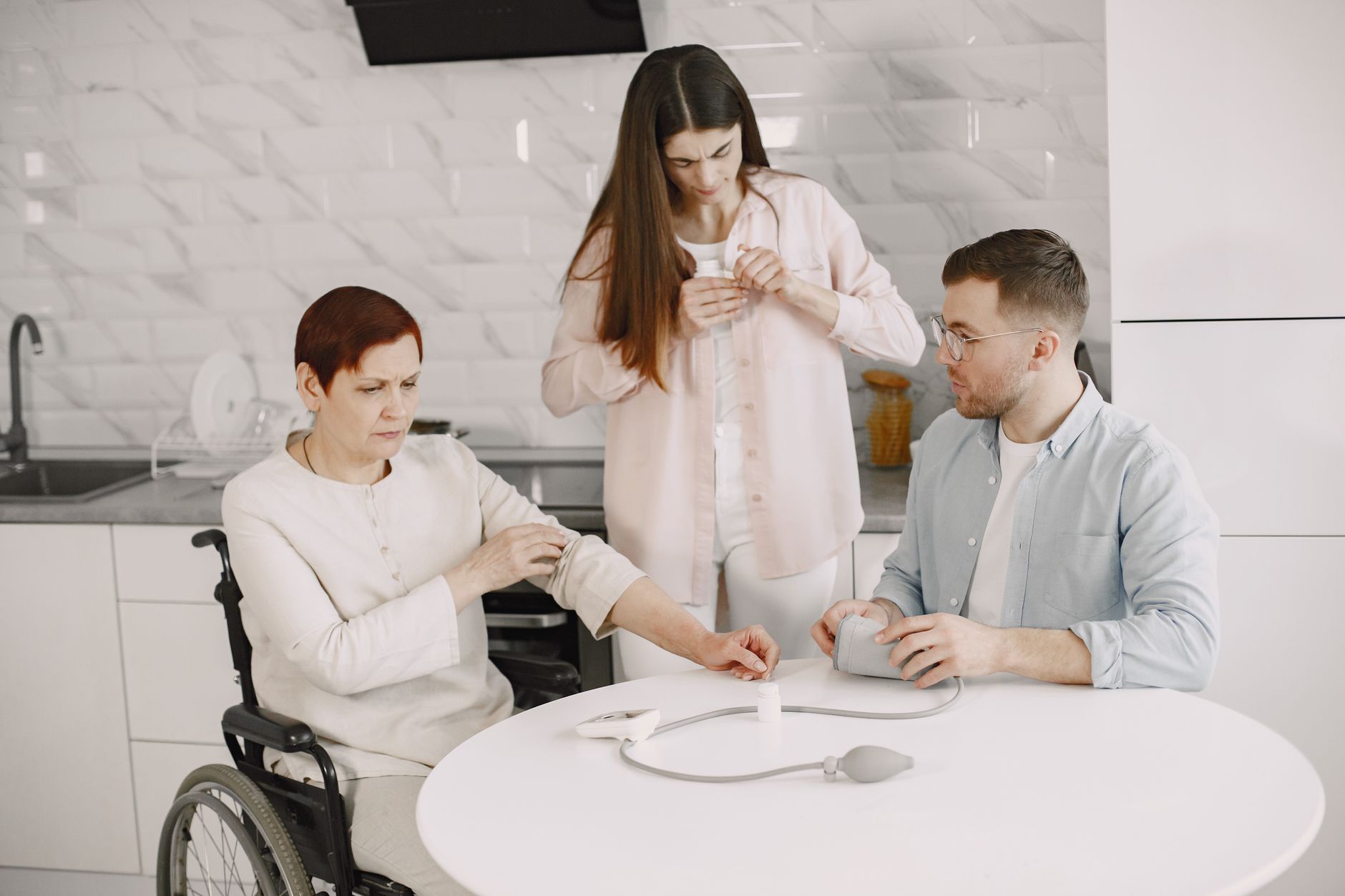
Global Certificate in Interprofessional Collaboration in Health and Social Care
Monday, 10 August 2026 11:57:10
International applicants and their qualifications are accepted
Overview
Overview
Interprofessional collaboration
is at the heart of this Global Certificate in Interprofessional Collaboration in Health and Social Care. It brings together healthcare professionals from various disciplines to provide comprehensive care.Designed for healthcare professionals, this certificate program focuses on building effective teams and improving patient outcomes.
Through a combination of online modules and practical exercises, learners will develop essential skills in communication, leadership, and teamwork.
By the end of the program, learners will be equipped to work collaboratively with colleagues from different backgrounds and disciplines.
Whether you're a nurse, doctor, or social worker, this certificate can enhance your career prospects and contribute to better patient care.
So why wait? Explore the Global Certificate in Interprofessional Collaboration in Health and Social Care today and take the first step towards a more collaborative and effective healthcare team.
Interprofessional Collaboration is at the heart of this Global Certificate in Interprofessional Collaboration in Health and Social Care, where healthcare professionals from diverse backgrounds come together to deliver comprehensive patient care. By combining theoretical knowledge with practical skills, this course equips you with the tools to foster effective collaboration and improve health outcomes. With interprofessional collaboration as its core focus, this program offers numerous career benefits, including enhanced job prospects and increased earning potential. Unique features include access to industry experts, real-world case studies, and a global network of like-minded professionals.
Entry requirements
The program operates on an open enrollment basis, and there are no specific entry requirements. Individuals with a genuine interest in the subject matter are welcome to participate.International applicants and their qualifications are accepted.
Step into a transformative journey at LSIB, where you'll become part of a vibrant community of students from over 157 nationalities.
At LSIB, we are a global family. When you join us, your qualifications are recognized and accepted, making you a valued member of our diverse, internationally connected community.
Course Content
- Interprofessional Collaboration: Principles and Practice • Communication and Interpersonal Skills • Leadership and Management in Interprofessional Teams • Patient Safety and Risk Management • Cultural Competence and Diversity in Healthcare • Health Promotion and Disease Prevention • Mental Health and Wellbeing in Interprofessional Practice • Policy and Governance in Healthcare Systems • Research and Evidence-Based Practice in Interprofessional Collaboration
Assessment
The evaluation process is conducted through the submission of assignments, and there are no written examinations involved.
Fee and Payment Plans
30 to 40% Cheaper than most Universities and Colleges
Duration & course fee
The programme is available in two duration modes:
1 month (Fast-track mode): £140
2 months (Standard mode): £90
2 months (Standard mode): £90
1 month (Fast-track mode) - £140
2 months (Standard mode) - £90
Awarding body
The programme is awarded by London School of International Business. This program is not intended to replace or serve as an equivalent to obtaining a formal degree or diploma. It should be noted that this course is not accredited by a recognised awarding body or regulated by an authorised institution/ body.
Start Now
- Start this course anytime from anywhere.
- 1. Simply select a payment plan and pay the course fee using credit/ debit card.
- 2. Course starts
- Start Now
Got questions? Get in touch
Chat with us: Click the live chat button
Key facts about Global Certificate in Interprofessional Collaboration in Health and Social Care
The Global Certificate in Interprofessional Collaboration in Health and Social Care is a comprehensive program designed to equip learners with the skills and knowledge necessary to work effectively with diverse healthcare professionals in various settings.
This certificate program focuses on developing interprofessional collaboration skills, which are essential for delivering high-quality patient care in today's healthcare landscape.
Upon completion of the program, learners will be able to demonstrate their ability to work collaboratively with healthcare professionals from different disciplines, including nurses, doctors, therapists, and social workers.
The program's learning outcomes include the ability to analyze complex healthcare issues, develop effective solutions, and communicate effectively with patients, families, and healthcare teams.
The duration of the program varies depending on the institution offering it, but most programs take around 6-12 months to complete.
The Global Certificate in Interprofessional Collaboration in Health and Social Care is highly relevant to the healthcare industry, as it addresses the growing need for interprofessional collaboration in healthcare settings.
Many healthcare organizations recognize the importance of interprofessional collaboration and are seeking professionals who can work effectively with diverse healthcare teams.
By completing this certificate program, learners can enhance their career prospects and demonstrate their commitment to delivering high-quality patient care in a collaborative healthcare environment.
The program is also relevant to healthcare managers and leaders, who need to develop their skills in interprofessional collaboration to ensure effective teamwork and patient-centered care.
Overall, the Global Certificate in Interprofessional Collaboration in Health and Social Care is an excellent choice for anyone looking to develop their skills in interprofessional collaboration and advance their career in the healthcare industry.
This certificate program focuses on developing interprofessional collaboration skills, which are essential for delivering high-quality patient care in today's healthcare landscape.
Upon completion of the program, learners will be able to demonstrate their ability to work collaboratively with healthcare professionals from different disciplines, including nurses, doctors, therapists, and social workers.
The program's learning outcomes include the ability to analyze complex healthcare issues, develop effective solutions, and communicate effectively with patients, families, and healthcare teams.
The duration of the program varies depending on the institution offering it, but most programs take around 6-12 months to complete.
The Global Certificate in Interprofessional Collaboration in Health and Social Care is highly relevant to the healthcare industry, as it addresses the growing need for interprofessional collaboration in healthcare settings.
Many healthcare organizations recognize the importance of interprofessional collaboration and are seeking professionals who can work effectively with diverse healthcare teams.
By completing this certificate program, learners can enhance their career prospects and demonstrate their commitment to delivering high-quality patient care in a collaborative healthcare environment.
The program is also relevant to healthcare managers and leaders, who need to develop their skills in interprofessional collaboration to ensure effective teamwork and patient-centered care.
Overall, the Global Certificate in Interprofessional Collaboration in Health and Social Care is an excellent choice for anyone looking to develop their skills in interprofessional collaboration and advance their career in the healthcare industry.
Why this course?
Global Certificate in Interprofessional Collaboration in Health and Social Care holds immense significance in today's market, particularly in the UK. The demand for healthcare professionals who can work effectively with various stakeholders is on the rise, driven by the increasing complexity of healthcare systems and the need for coordinated care.
According to a report by the UK's National Health Service (NHS), there is a shortage of 100,000 nurses, midwives, and allied health professionals in England alone. This shortage can be attributed to the growing need for interprofessional collaboration, which is essential for delivering high-quality patient care.
| Year | Number of Healthcare Professionals |
|---|---|
| 2015 | 1,144,000 |
| 2020 | 1,244,000 |
| 2025 (projected) | 1,344,000 |
Who should enrol in Global Certificate in Interprofessional Collaboration in Health and Social Care ?
| Ideal Audience for Global Certificate in Interprofessional Collaboration in Health and Social Care | The Global Certificate in Interprofessional Collaboration in Health and Social Care is designed for healthcare professionals, social workers, and educators who want to enhance their skills in collaboration and teamwork. |
| Professionals with a passion for improving patient outcomes | In the UK, a survey by the Royal College of Nursing found that 75% of nurses reported feeling overwhelmed by workload, highlighting the need for effective collaboration and communication in healthcare settings. |
| Those seeking to advance their careers in leadership or management roles | According to a report by the Health Foundation, there is a growing need for healthcare leaders with expertise in interprofessional collaboration, with 60% of NHS trusts reporting a shortage of leaders with this skillset. |
| Individuals working in multidisciplinary teams | The Global Certificate in Interprofessional Collaboration in Health and Social Care is particularly relevant for those working in teams with diverse skill sets, such as community health teams, mental health teams, and care homes. |
Ready to advance your career?
Join thousands of learners on Global Certificate in Interprofessional Collaboration in Health and Social Care . Enrol today and take the next step.